Tuesday, October 29, 2019

Chapter Six: Women Photojournalists


Photo By: Paula Bronstein


The woman photojournalist that I chose to research was Paula Bronstein. According to the book “Paula Bronstein Photojournalist”, an interesting fact about Paula is that she “ is one of the world’s leading female photojournalists with a career that spans over three decades”. Bronstein is from Boston, Massachusetts, but she has travelled all around the world for her work. According to Getty Images “Bronstein worked for newspapers including The Hartford Courant and The Chicago Tribune before moving overseas to Thailand in 1998 to cover the Asian region including Afghanistan and Pakistan”. While she has worked at many different locations, Bronstein is most known for her work with Getty Images where she worked for about 15 years.

According to paula “Paula is currently freelance, her images have been published in almost every globally recognized publication and exhibited in numerous countries”. As Lynsey Addario states in the video Lynsey Addario, Institute Fellow and Award-Winning Photographer by InstituteWomenGender, “most of photojournalism isn’t actually about photography, it’s about relationships”. This fact is so significant because females tend to be much better at establishing relationships with certain populations including other woman.

As Professor Nordell states in his video Women Photojournalists “…women in many different professions have encountered barriers unlike any that their male counterparts have endured”. Gender discrimination in the workplace has been a common occurrence all around the world ever since women joined the work force. To this day, women are discriminated against by men in their own careers because of their gender. According to the article Discrimination Against Women in the Workplace: Everything You Need to Know by Up Counsel, “Examples of discrimination against women in the workplace are when a woman is rejected for employment, when a woman loses a promotion to a less-qualified male employee, or when a woman is harmed in any way because of her gender”.

According to the article Female police officers vs Male. Why does the discrimination still exist? By Liana, “Female police officers experience a higher level of stress vs. male policemen. This is because of existing gender stereotypes, which have a bad psychological effect on female police officers”. Women police officers are often not taken seriously by both civilians and their co-workers. This kind of treatment is not uncommon in the world today as females are often overlooked.

As stated in the article Said to Lady Journos, phrases like “Can I speak to a man?” are often used to discriminate against women of any field. Women are sometimes treated as objects in the workforce. They are often overlooked, ignored, and sometimes even sexually harassed. While this treatment may not be as prevalent today as it was a century ago, it stills occurs all around the world.
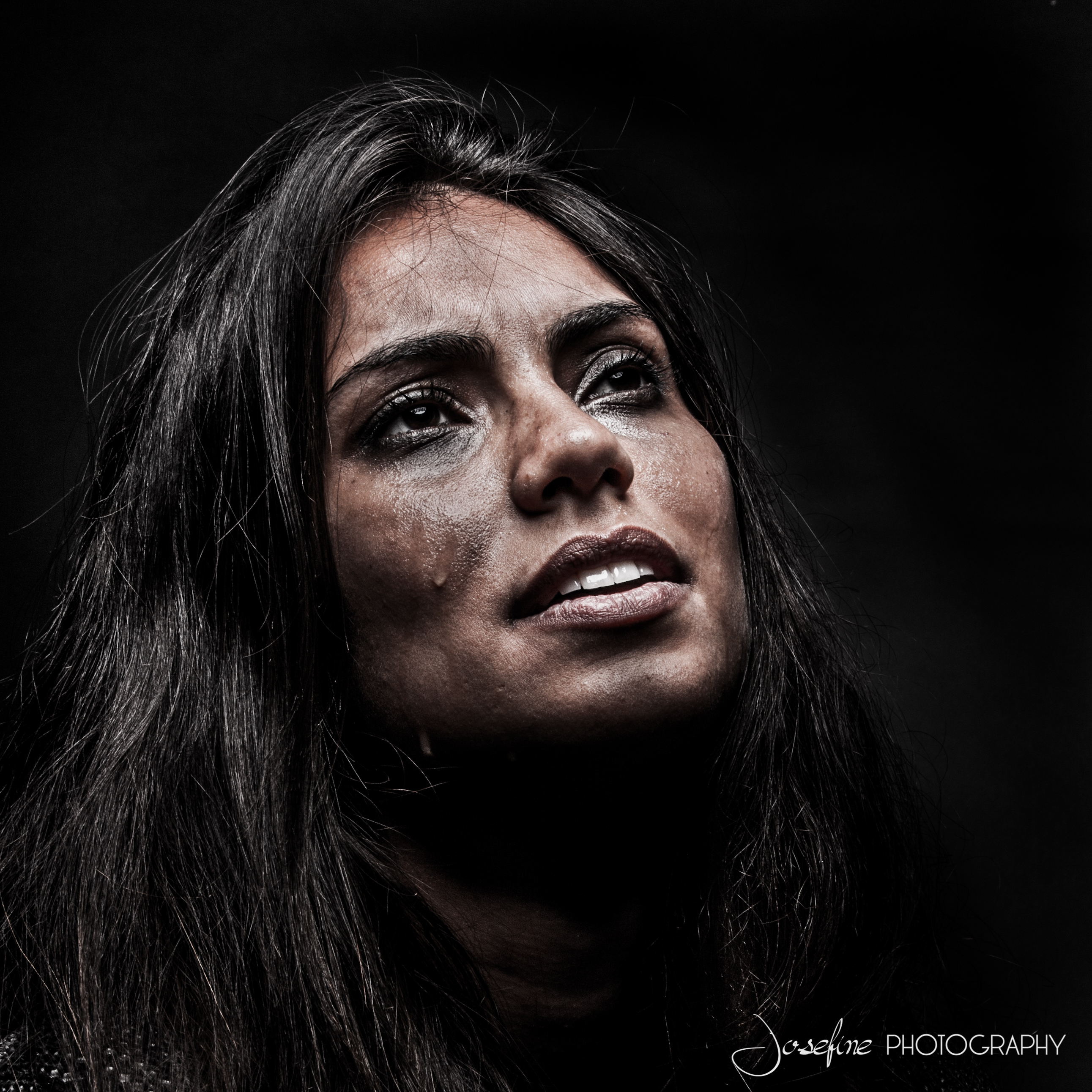


Photo By: Josephine Photography 

Year Created: 2013

Texture: In this photograph, you can really see the texture of the women's skin and hair. Both of which appear to be rough. The women's skin is covered in dirt and her hair appears frizzy and untaimed and there are wet spots on her cheeks from tears implying that this woman has been through something traumatic,

Quality of Light: The lighting in this photograph is rather dramatic. The subject, who is clearly in despair, is looking up towards the light source. The light source makes the image appear more optimistic, as if the subject now has hope.

Keep it Simple: The photograph is very simple and not cluttered. Attention is immediately drawn to the subjects face and nowhere else. The dark background also helps to draw the viewer's attention tho the woman.

 I chose this image because it portrays a seemingly battered or abused woman. In my opinion, this photograph goes great with the idea of gender discrimination. This photo may portray exactly how one of the women who have been discriminated against feels.

Photo By: Mihaela Noroc

Year Created: 2018

Contrast Appropriate: There are a lot of contrasting colors in this photograph. The dark colors in the background along with the subject's hair directly contrast with the lighter color of her skin and paint. Overall the contrast emphasize the subject's natural beauty 

Feeling: The image creates a happy feeling. The bright colors are rather cheerful and happy. The subject has a slight smile which adds to the cheerfulness of the photograph.

Black and White or color? The image is in color, which really makes it pop. The subject stands out to the viewer with the bright colors painted on her face and the fabric of her shirt.

I chose this photograph because it went along with the theme of empowering women. This photograph represents women of other countries as well as women in America who are faced with adversities and still must maintain a positive outlook.


Tuesday, October 22, 2019

Technology Timeline

Below is a link to the PowerPoint presentation which includes links to sources:
timeline.pptx

Tuesday, October 8, 2019

Chapter Four-Working in the Digital Age

Photo by: Rishi Sanyal 


Modern day technology has without a doubt made everyday life much easier. A great example being the development of digital cameras. While digital cameras may have initially hindered the photo-taking process when they first came out, they have certainly been improved since. Now people have forgotten about the struggles that accompany pre-digital cameras. As Professor Nordell points out in his video Working in the Digital World-Part 1 “…there is always that moment-Is that film going to run out on me”. While you can still run out of space on a digital cameras SD card, it is much more unlikely because of the card’s storage capacity, and a card is much more convenient to change than the film of an older camera.

The development of the hybrid DSLRS was just one of the countless ground-breaking developments of the twenty-first century. This camera had a unique feature that was not present in other cameras at the time. As Professor Nordell states in his video Working in the Digital Age-Part 2 “Suddenly with one camera, you have the ability to do stills and video”. Not only is the camera used for still-life photography, but it could also capture videos as well, which was a huge development at the time.

These cameras are so significant in the world of photojournalism because they allow the photojournalist to be much more versatile when capturing actions. Whether they need to take a photograph or a video, they can reach for a single camera. Being that this camera is digital, the Photojournalist can also rest assured knowing that if they do run out of storage space they can simply just pop in a new SD card. So it is very unlikely that they will miss capturing that critical event. Comparing them to an older camera such as the twin lens reflux camera you can see some obvious advantages including the dimensions. The digital camera is much more convenient to carry around and ultimately just more convenient to use. A photojournalist would most likely prefer to carry the digital camera because of its ease so they do not miss the moment.

While digital photography is much more convenient and attainable for almost everyone, pre-digital photography was still extremely crucial during its time. An example of the significance being in CBS New’s article CBS News’s article Photography that Changed the Way We View War. The author stuns the readers with the line: “Such as the portrait found in the hands of a dead soldier after the Battle of Gettysburg”. This quotation shows the readers just how much of an impact photographs had on people back then, especially soldiers who held on tightly to photos of their loved ones.. Photojournalism is an ever-changing and fast-developing concept. All these developments can be credited to one man. As Professor Nordell states in his video Before there were Pixels-Part 1 “The birth of photojournalism, documenting news events, can be attributed to Matthew Brady”. Because of Brady, cameras such as the hybrid DSLRS and the twin lens reflex cameras exist today.
Photo by: Kevin Kadooka 

Tuesday, October 1, 2019

Chapeter Three: The Art of Photojournalism


Photo by: Angel Albring


Year Created: 2018

Subject’s Expression
The subject is very focused on his race. His eyes are wide open and staring straight forward. The last thing he is thinking about is posing for a photo. The subject appears to be tired, with his mouth dropped open, but also determined to finish that race.


Background compliments or detracts from composition
There are two other people in the background of the photo. While they are literally competing with the subject as they are racing, they actually compliment the photograph very well. They help bring to light the actions of the subject and help to show his determination. The viewers can see how hard the subject is pushing to be ahead of people that don’t have the disability he has.


Obvious main subject, about ¼ to 2/3 of image area:
It is very clear who the subject of this photograph is. He is the centermost individual and he takes up the most space in the image. If the other people in the image were left out, I feel that the reality of what the man of the wheelchair is doing wouldn’t be noticed as much. This man is racing in a wheelchair and keeping up with individuals who are on foot, which is amazing.


I chose this image because I am a runner myself, and I know how hard races can be with fully functioning legs. The whole time you just want to stop and quit, but you keep going. This man’s struggle is way more intense but he just keeps pushing and finishes the race.


Photo by: William Jennings


Year Created: 1882

Contrast Appropriate
The contrast between light and dark in this photo is very interesting to me. While this photo is predominantly dark, the light pieces are so bright that they demand your attention, so it’s very easty to notice them immediately.


Depth of field
The perfect amount of the subject is in frame. Considering the subject is literally a lightning strike, the photographer did an outstanding job of capturing this phenomenon. As previously stated, the subject is the immediate center of attention in this photograph because of the positioning.


Is the image black & white or color
This image is in black and white. Being that it is an old photograph, that is to be expected. The black and white does add to the effect of the photograph. Overall, it makes it much more ominous. The viewer can put themselves in the photograph and imagine the thunderstorm that resulted in this photo.


I chose this image because the subject really spoke to me. I really enjoy watching thunderstorms and seeing all of the different unique patterns the lightning makes when it strikes.


Photo by: V-2 #13 Rocket

Year Created: 1946

What feelings does the image create?
This image is so interesting to me. I find it fascinating that this was the first image taken in space, and it was captured by a rocket rather than a human photographer. This photograph really makes you think about all of the things that we may think to be impossible, but in reality, they may just be an invention away.


Texture
The Earth and space in the photograph clearly have very different textures. For instance, the planet has a rough appearance, where as the photograph appears smoother in the dark areas. Earth also appears to be patchier in certain spots.


KEEP IT SIMPLE
The composition of the photo is simple once you realize what you are actually looking at. Before you realize that it is a phot of Earth from space, it is rather confusing. The lack of color and focus adds to the difficulty in comprehending the composition.


I chose this photo for a couple different reasons. The first reason was that I am really interested in astronomy, and this was the first photo ever taken from space. The second reason that I chose this photo was because it really is not a simple one. Not many people would be able to guess what that photograph is of without being told.

Tuesday, September 24, 2019

Chapter Two: Pre-Digital Photographic Technology

Photo by: Kristen Foster 


The world of photojournalism is constantly changing. New technology is constantly being developed to make the process of photograph taking even more simple. People can now share photos and videos with the rest of the world in seconds, but this was not always the case. As Professor Nordell says in his video Before there were Pixels-Part 1 as he refers to the beginning of photojournalism “Many feel it actually started during the Crimean war, when Roger Fenton went out to take photographs”. As many know, the Crimean war took place around the middle of the nineteenth century. Therefore, photojournalism has been rapidly developing over the past 2 centuries into what we know it as today.


An important aspect of photojournalism is the photographs themselves. These items allow others to theoretically exist in places they are not or to even experience things they may not have been present for. A perfect example is in CBS News’s article Photography that Changed the Way We View War when the following line is stated: “Such as the portrait found in the hands of a dead soldier after the Battle of Gettysburg”. This sentence is so touching because even nowadays soldiers keep photographs of their loved ones on them and use them as their motivation to keep fighting. This allows citizens to see these people not only as soldiers or killing machines, but as actual human beings with loved ones that they hope to one day return to. Another great example is the two sentences in John G. Morris’s article The Magnificent Eleven: The D-Day Photographs of Robert Capa that states "Capa's D-Day photos have become classics. One of them, depicting a GI struggling through the churning surf of Omaha Beach, has survived as the definitive image of the Normandy invasion". This statement shows the readers just how much one photo can represent an entire time period.


An interesting development in photojournalism was the invention of the Twin lens reflex camera, first developed in the late nineteenth century. For people of our time, this camera is rather odd-looking with the two lenses on the front, but this was actually quite an impressive invention during its time. For instance, as stated in Collectors Weekly’s article Vintage Twin Lens Reflex Cameras “They were initially developed to make it easier, and faster, to focus a camera between shots”. The only significant problem was that the mirror on the top of the camera distorted the view through the viewfinder and therefore made it harder for the photographer to capture the perfect image. This is obviously not a problem in modern times because of the advancement of camera phones and digital cameras. The greatest significance of this camera is that it led to the inventions of even more advanced cameras and eventually a technology allowing for rapid production of things like newspapers and magazines. As Professor Nordell States in his video Before there were Pixels: Part 2, “There was a development with printing technology of developing magazines”. These papers were allowed to print more photos as a result of this photojournalistic developmental cascade that began with the first camera.


Looking back at past photojournalistic inventions, including the twin lens reflex camera, photographs held much greater emotional value then than now. While this may not be true for everyone, people do not truly appreciate photographs and they often overlook the significance. But in previous times, people could not just take as many pictures as the wanted on their cell phones, they had to use film and have them developed and pay for this process. So by the time they had their pictures, they had a much greater appreciation for them.
Photo by: Ansel Adams 

Tuesday, September 17, 2019

Chapter One: Can a Photo Change the World?


Many believe that photographs have the ability to change the world, and they are correct. Certain images can change one’s entire outlook on life and make them feel emotions they may have never felt before. As stated by Johnathan Klein in the video Photos that Changed the World, “Images provoke reactions in people, and those reactions have cause change to happen”. While the images themselves are not going out and changing the world, they are the direct cause of the changes taking place.


Everyday, people are looking at photographs. Some of which may be on social media while others may be in printed newspapers and magazines. These images influence how we live our day-to-day lives. These images can potentially provoke people to dress, eat, or speak different ways, the contents of these photographs alter our thought processes whether they realize it or not. A perfect example of an image’s influence on society is from Professor Nordell’s video Photograph of Boris Yeltsin Dancing. As the narrator of this video explains, “…which was part of media coverage that convinced the Russian public that the president was healthy enough for reelection, and helped tip the election in his favor”. Just seeing a man dancing on stage was enough to sway the votes of countless Russian citizens.


Another way that images can change the world id through censorship. Certain populations may only be able to see the world through the images the government allows them to see. For instance, in the article Censorship of War Casualties, the author Ted Rall states that “US mainstream media and the public's willful ignorance is to blame for lack of knowledge about true cost of wars”. The media is hiding all of the pictures of dead troops and the blood shed from wars. Ultimately, this is tipping the public in favor of wars because they are not seeing the effect it has, the deaths of countless innocent people who have dies serving our country. This point is further elaborated when Professors Nordell’s video Do Photographs Change the World?. When he stated that “Sometimes there are images that are so shocking or horrifying that they choose not to publish them” the presence of censorship in society is brought to light for the viewers.


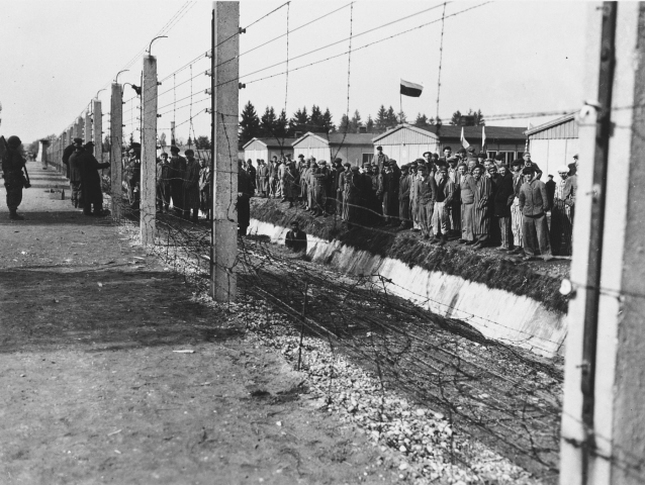
There were two images that changed the way that I view life. The first image was much more recent. This photograph is of the charred remnants of Amazonian rain forest trees. The reason why this image changed me is because it allowed me to see how cruel and thoughtless humans can be, This fire was caused by careless individuals, and now thousands of animals, plants and people have lost their lives. Because of media censorship, many people in the United States did not even know about the fires until a while after the fires had picked up momentum. The final image that changed my view of the world was a much older one taken at a concentration camp after the fall of the Nazis. The photo was taken at the start of the liberation of the Daschau concentration camp. In the photo, the Jewish prisioners were gathered around the gate. In the moment this photograph was taken, many emotions can be felt, extreme anger, sadness, relief and hope for a better life are all felt at once. As this was another act of human ignorance, I now have a stronger dislike towards my own species.
Photo by: Bruno Kelly 


Picture
Photo by: William McLaughlin 


Tuesday, September 10, 2019

The Definition of Photojournalism


When thinking about the term photojournalism, two things come to mind. The first is a camera, and the second is journalism or some form of documentation. Photojournalism allows the world to not only learn about what goes on in other countries at other times, but to also see these events as they unfold. The concept of photojournalism can be thought of as the documentation of history through photographs.       
Photo by: Walker Evans
 As Professor Nordell says in his video What is Photojournalism?, “Photojournalists capture verbs-people doing things”. Everyday we take photos on our cellphones, whether they are intended for social media or just for ourselves to look at one day, they are usually shallow with little significant meaning. Photojournalists are the opposite. They live for capturing the perfect moment that will tell a story. 
Along with other photographers, photojournalists are artists of their field. In the video In Harms Way - War Photographers Zoriah and Alissa - Part 1, photojournalist Zoriah says “Photojournalism allows me to create my projects myself and go out into the world on my own…”. These journalists have the power to literally create a story with their photos, and others will be able to witness these stories with their own eyes, as if they were there themselves. These photojournalists are witnessing the lives of others in their towns or even on the other side of the world. For instance, in Professor Nordell’s video Jason Henske-Photojournalist, Jason Henske says “You’re following people from youth to adulthood”, as he describes what it is like to do his job in the town he lives in. 
Photo by: Alfred Stieglitz

Studying photojournalism is so important because you are able to see history right in front of you, and even hold it in your hand. This is so significant in the world we live in today because it allows us to better learn from our mistakes. When we can see the physical and emotional pain others are going through on the other side of the world, it makes us more conscious of our actions and the lives of others.